
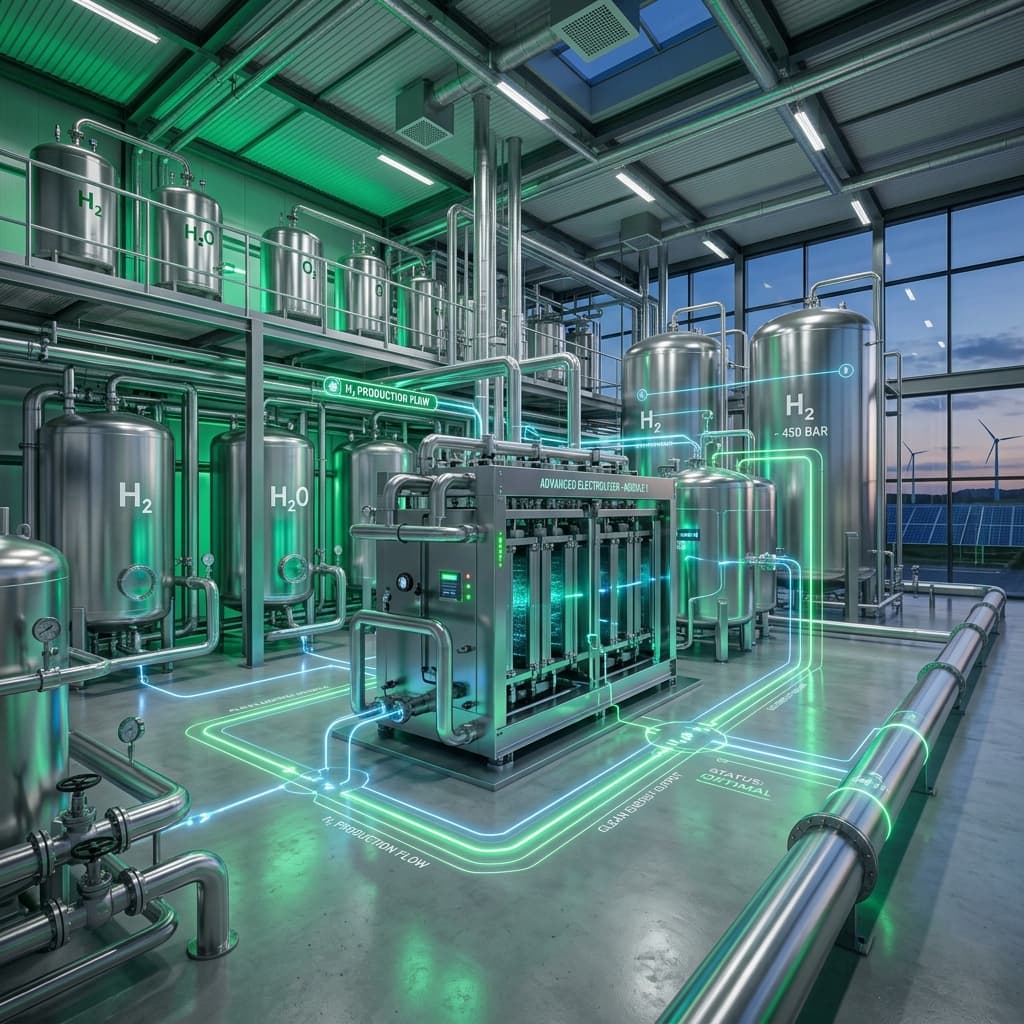
Green hydrogen is widely regarded as the ultimate frontier in industrial decarbonization, offering a clean, versatile alternative for heavy transportation, steel production, and chemical processes.
However, translating the promise of hydrogen into a viable commercial reality requires a highly structured roadmap. Developing high-yield green hydrogen infrastructure presents distinct challenges, from variable renewable power matching to high-pressure logistics and strict safety standards.
Phase 1: Feasibility and Pilot Design
Before breaking ground, projects must undergo intensive conceptual engineering:
- Power-to-Gas Modeling: Optimizing the ratio between the renewable energy supply (solar/wind) and electrolyzer capacity.
- Water Supply Assessment: Ensuring a reliable, high-purity water source, which is critical for electrolysis.
- Safety Hazard Identification (HAZID): Mapping out venting systems, hydrogen sensors, and fire suppression protocols.
Phase 2: Sourcing and Technology Selection
Selecting the right technology stack determines long-term efficiency and system lifetime:
- Electrolyzer Chemistry: Balancing the trade-offs between Proton Exchange Membrane (PEM) systems (highly responsive to renewable fluctuations) and Alkaline electrolyzers (more mature and cost-effective).
- Storage & Transport: Choosing between gaseous compression, liquid organic hydrogen carriers (LOHC), or ammonia synthesis based on the off-take requirements.
Phase 3: Integration and Grid Sync
Managing the fluctuating nature of wind and solar power requires advanced power conditioning and grid integration. Implementing smart microgrids and sub-second control systems ensures that electrolyzers operate within safe load bounds, preventing premature membrane degradation and maximizing efficiency.
"The roadmap from pilot to scale relies on mitigating technological, regulatory, and commercial risks in a unified lifecycle plan."
Conclusion: A Decarbonized Future
As policy incentives align and manufacturing costs fall, the transition to utility-scale hydrogen is accelerating. By combining strategic planning with elite engineering, GNE Infra supports industrial leaders in navigating the path to net-zero, paving the way for a self-sustaining clean hydrogen ecosystem.